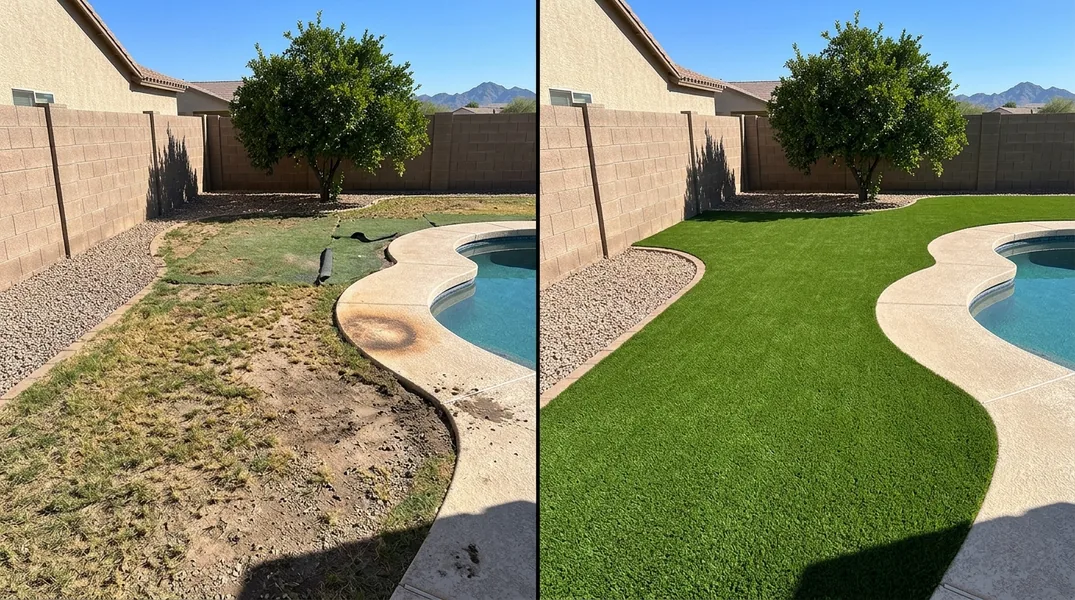
Why Base Prep Matters More Than You Think
When homeowners in Phoenix think about artificial grass installation, they often focus on the turf itself. They picture the lush green lawn, the durability, and the water savings. What they don't always realize is that the success of their entire installation depends on what happens beneath the surface. The base preparation is where Residential Artificial Grass Installation projects truly live or die.
Think of base prep like the foundation of a house. You wouldn't build a home on unstable ground, and you shouldn't install artificial grass without a proper foundation either. In the Phoenix area, where the climate and soil conditions present unique challenges, the underground work becomes even more critical. Poor base preparation can lead to drainage problems, uneven settling, premature wear, and costly repairs down the road. Professional installers know that cutting corners underground is a false economy that homeowners inevitably regret.
Understanding Valley Caliche and Its Impact on Artificial Grass Drainage
If you've ever dug into your yard in the Phoenix valley, you've likely encountered caliche. This natural cement-like layer of calcium carbonate forms just beneath the topsoil and is extremely common throughout the region. While caliche can be useful in some applications, it poses a significant challenge for artificial grass installation because it's essentially impermeable. Water cannot pass through it easily, which means that without proper intervention, any moisture on your artificial grass will have nowhere to go.
This is where artificial grass drainage becomes a make-or-break factor. When caliche is left in place and undisturbed, water from rain, irrigation, or cleaning will pool on your turf or beneath it. Standing water leads to mold growth, odors, algae, and a host of problems that undermine the entire installation. The caliche also prevents proper settling and can cause the turf to shift unevenly over time. Professional installers at Phoenix Turf Installation understand that caliche must be addressed head-on, not ignored or worked around.
What to Put Under Artificial Grass: The Right Material Stack
Knowing what to put under artificial grass is essential knowledge for any homeowner considering this upgrade. The typical base preparation involves multiple layers, each serving a specific purpose. The process begins with removing or breaking up the caliche layer, which is labor-intensive but absolutely necessary. Once the caliche is addressed, the next step is adding a proper gravel base, typically composed of decomposed granite or crushed rock that compacts well and provides excellent drainage.
On top of the compacted gravel base, most professional installations include a layer of sand to level the surface and create a smooth, cushioned foundation. This sand layer is crucial because it ensures the turf sits evenly and helps prevent the underlying materials from shifting. Finally, an artificial grass underlay or geotextile fabric is installed directly beneath the turf itself. This fabric prevents the sand from mixing with the gravel below while still allowing water to drain through. The combination of these layers, properly installed and compacted, creates a stable, well-draining system that will support your artificial grass for years to come.
Turf Base Prep: The Installation Process Step-by-Step
Turf base prep is more than just dumping materials and spreading them around. It's a methodical process that requires experience and precision. The first step is site assessment and caliche removal. Depending on the thickness and hardness of the caliche layer, this might involve breaking it up with specialized equipment, excavating it entirely, or using a combination of methods. Some areas of your yard may have thicker caliche than others, so a good installer will assess the entire project area carefully.
Once the caliche is managed, the gravel base is added in layers, typically two to three inches of compacted material. Each layer must be compacted thoroughly using a plate compactor or similar equipment. This compaction is critical because it prevents settling and movement after the turf is installed. After the gravel is properly compacted, a layer of sand is added and leveled to create a smooth, even surface. Finally, the geotextile fabric is laid down, and then the artificial grass is unrolled and secured. When this process is done correctly, the result is a stable, attractive, and long-lasting installation that will serve your family well.
Drainage Challenges Specific to Phoenix Homes
Phoenix's unique climate and soil conditions create specific drainage challenges that generic installation methods simply cannot address. The valley's caliche layer is notoriously problematic, and the intense summer heat means that any standing water will quickly become a breeding ground for algae and bacteria. Additionally, Phoenix experiences occasional but intense monsoon rains that can overwhelm poorly designed drainage systems. A proper base prep strategy accounts for these regional realities.
For homeowners with Pool Surround Turf or Pet Turf & Dog Run Installation, drainage becomes even more critical. Pool areas generate constant moisture, and pet areas require excellent drainage for sanitation and longevity. Similarly, if you're installing a Putting Green Installation, proper drainage ensures consistent playing conditions. Professional installers in Phoenix understand these nuances and design base preparations that handle the region's specific challenges.
Choosing a Professional Installer: Why DIY Base Prep Often Fails
Many homeowners are tempted to save money by attempting their own base preparation or hiring inexperienced contractors. This is almost always a mistake. Base prep requires specialized knowledge about soil conditions, proper compaction techniques, drainage principles, and local building considerations. An inexperienced installer might not recognize caliche problems until it's too late, or might use inadequate materials that fail within a year or two. The cost savings from DIY work or cheap labor evaporates quickly when you're dealing with drainage failures or uneven settling.
Phoenix Turf Installation brings decades of combined experience to every project. Our team knows the soil conditions throughout the Phoenix area, understands caliche challenges intimately, and uses proven methods that ensure long-term success. If you're ready to move forward with artificial grass installation and want to ensure your base prep is done right the first time, we invite you to contact us for a free estimate. You can also call us at (602) 387-6265 to discuss your specific project and learn more about our approach to base preparation. Investing in professional installation means investing in years of hassle-free enjoyment of your new lawn.
Looking for a professional artificial grass installation company in Phoenix? Phoenix Turf Installation responds fast for all your artificial grass installation needs.
Get a Free Quote